Val de Combrès
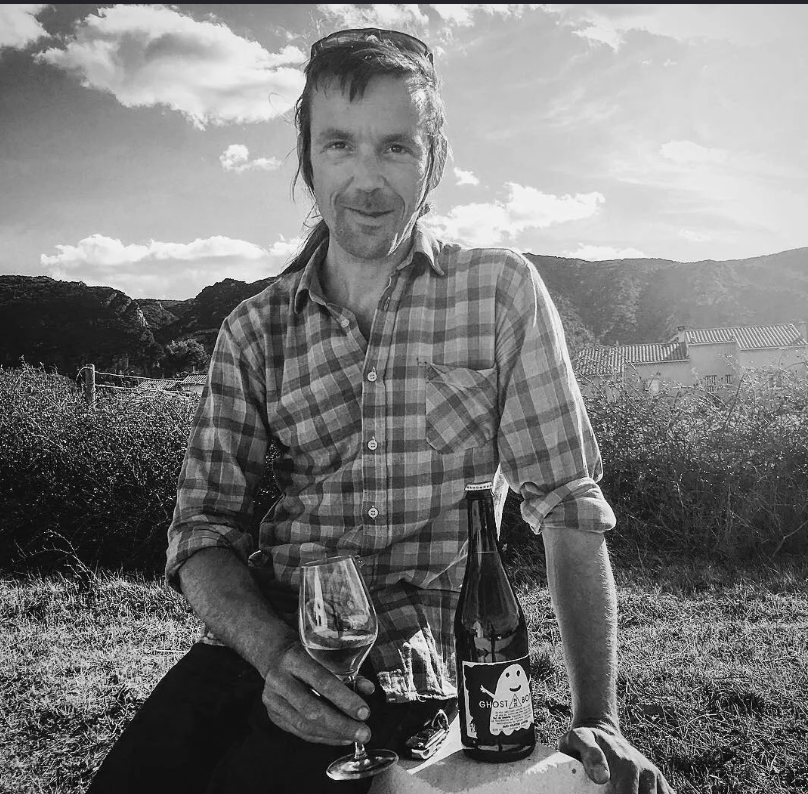
Valentin Létoquart used to just be a grape farmer selling grapes to the co-op in his sleepy town of Luberon in the Rhone delta until something clicked for him. One day he realized that everything he was tasting from his region was the same — a veritable sea of conformity uneasily sandwiched between the Southern Rhône heft and the industrial glut of Provence. What’s worse was that, he realized, the wines tasted bad – wines that said nothing of the rough-hewn beauty of the land or the backbreaking labor that went into making wine there. With that in mind, he decided to leave the co-op and learn from from similarly minded growers, most notably Eric Pfifferling of L’Angelore. Finally, in 2013, he created his own estate with one overarching goal: “We live in paradise – our wines should taste like it.”
And what a paradise Luberon is, a true synthesis of the deep heat of the southern Rhône and the constant winds and oceanic soils of Provence. So far, only winemakers from more prestigious parts of the Rhône have noticed Lubernon’s potential, quietly farming out production of oceans of wines that reliably taste big and expensive for anonymous cuvees. However, it is through winemakers like Valentin that the actual outlines of the region will be found and the terroir will be elucidated.
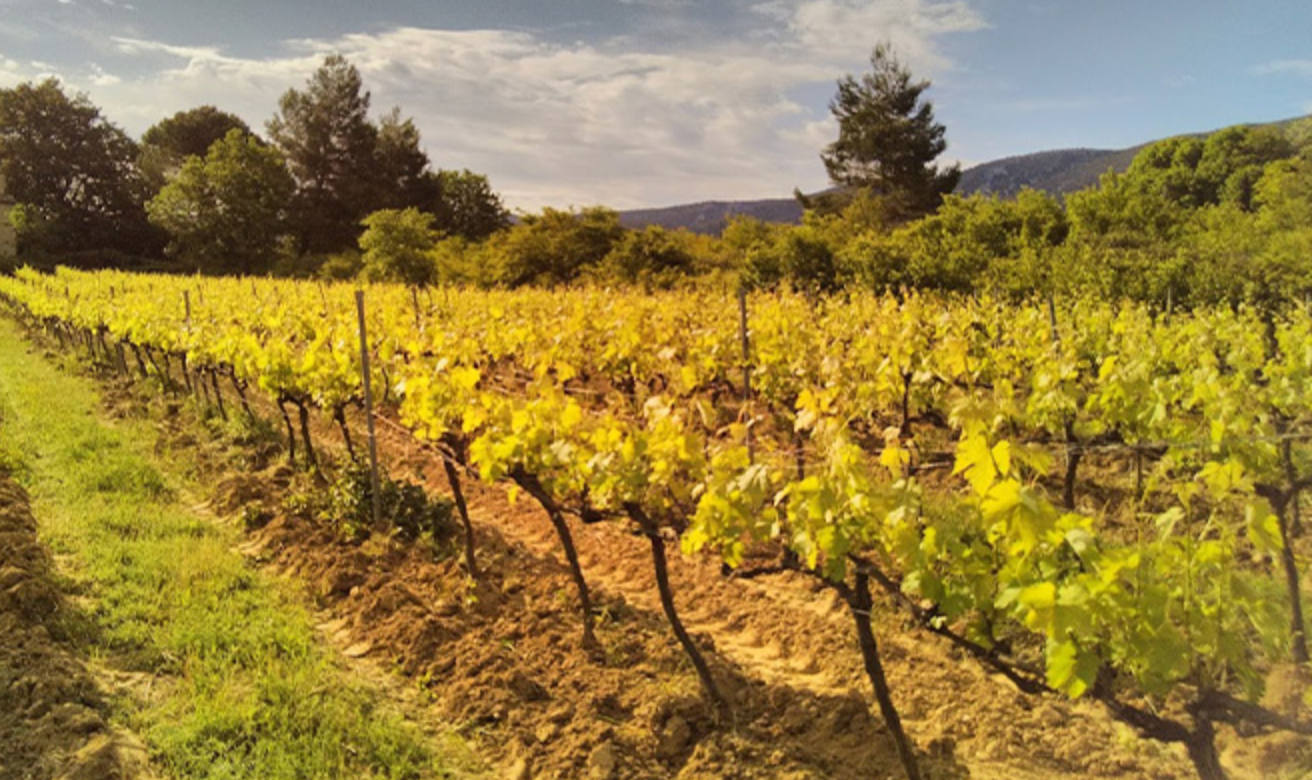
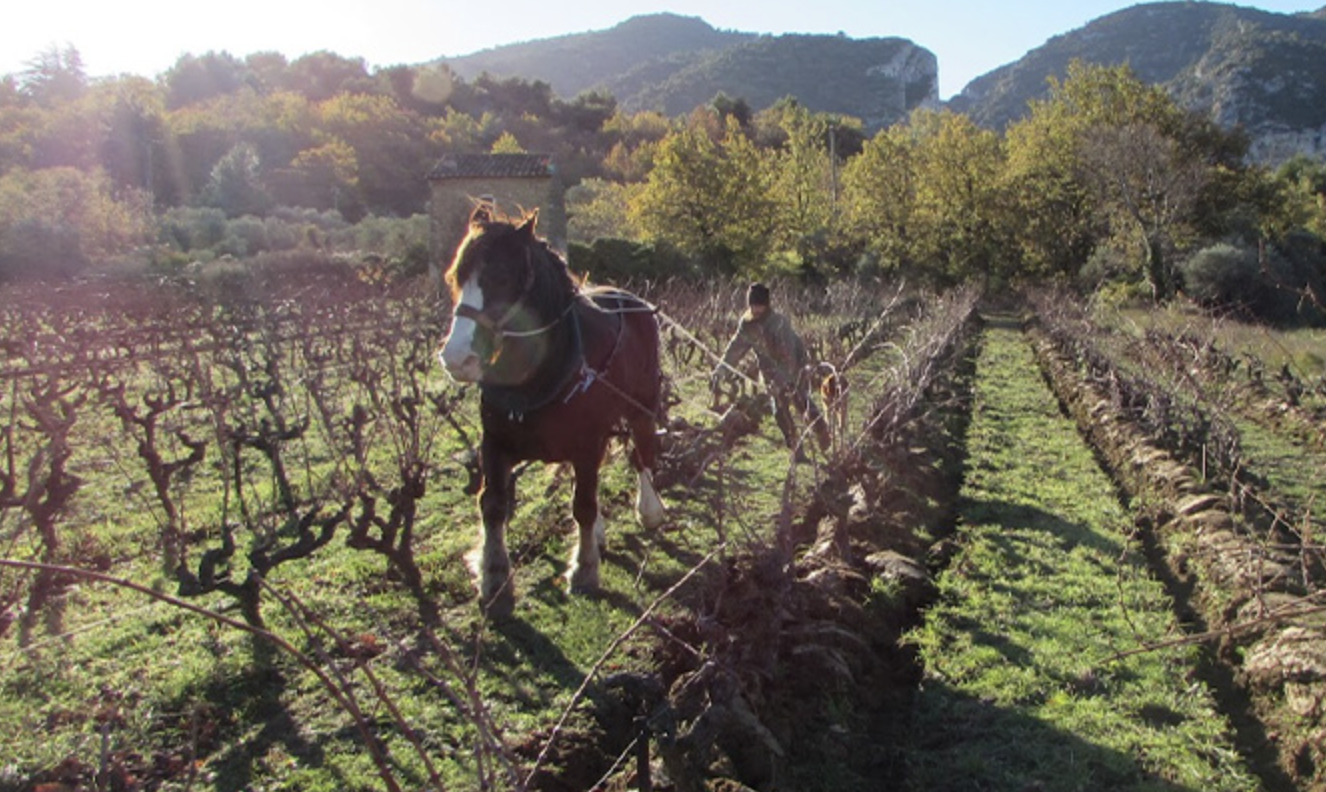
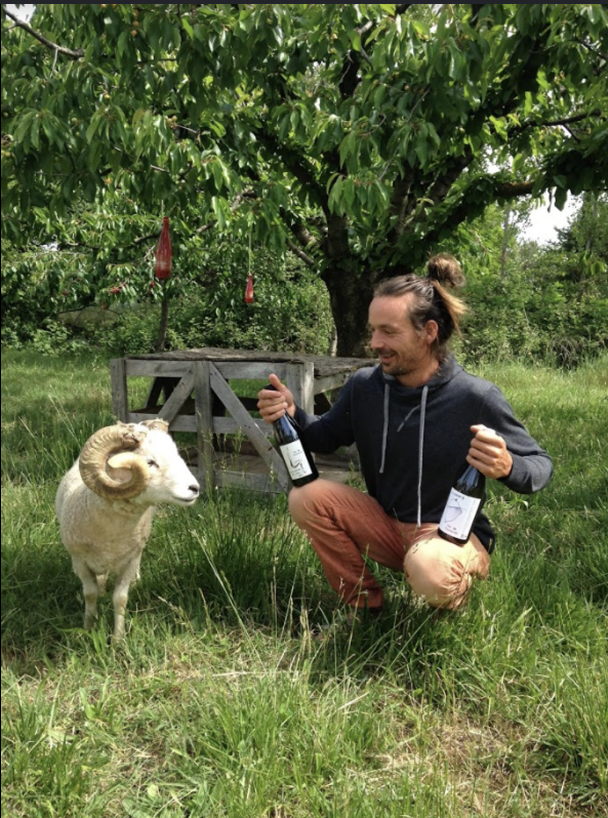
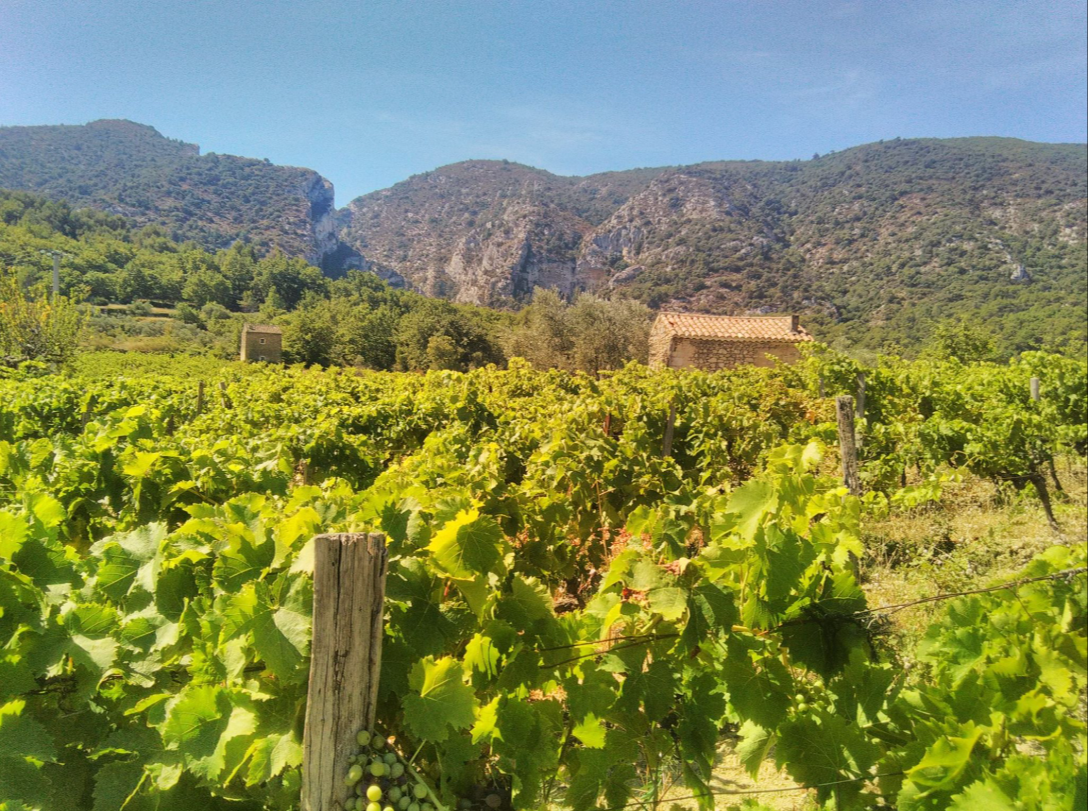
Since commencing his venture, Valentin has committed himself to making wine that actually spoke of the land, his work and his devotion to ethical and pure farming. In contrast to the landscape of lunar-surface like agriculture that marks the region, Valentin’s vines are blanketed with indigenous cover crops, lovingly “managed” by his animal herds with periodic applications of biodynamic teas. Valentin’s winery stands in front of a massive ridge of calcaire, topped with an almost shockingly green forest, providing both the necessary mountain shadow but also helping to trap needed moisture. As such, the wines are marked and shaped by the heat and the savagery of the landscape – but they are in no way marred by them. Rather, the punishing elements of the Rhône delta are chisels that help Valentin pare away the extraneous in his wines, leaving tightly coiled and angular wines of wild energy and joy.
In the cellar, Valentin pares down even further, eschewing the usage of any additives at any time, ever, including so2. This isn’t just dogma – Valentin suffered a faceful of powdered so2 about a decade ago during an accidental fall at the cooperative. As a result, he lost his sense of smell and taste for almost a year. “It is a poison,” he says of the molecule, and not a compromise he’s willing to make. That being said, Valentin is very aware of the potential for wine flaws and keeps a scrupulously clean cellar and also holds back any wine with issues so they can resolve themselves.
If you squint, you can taste the Pfifferling DNA in Valentin’s transcendent rosés — but at heart, the wines aren’t Tavel clones. Instead, they’re a lot more angular and rustic, with an irrepressible energy that makes you want to house an entire bottle. We’ve found the current release to be sound from day one and, now, after a bit of cellaring, to be absolutely thrumming with energy – even after being open for a day or two. That being said, we’re discovering that several of these cuveés, most notably ‘Les quilles de Joie’ and ‘Les Champs Magnetiques,’ have massive vin de garde energy. By all means, they’re ready to go now, but we’re absolutely socking away a few bottles for our future selves.